

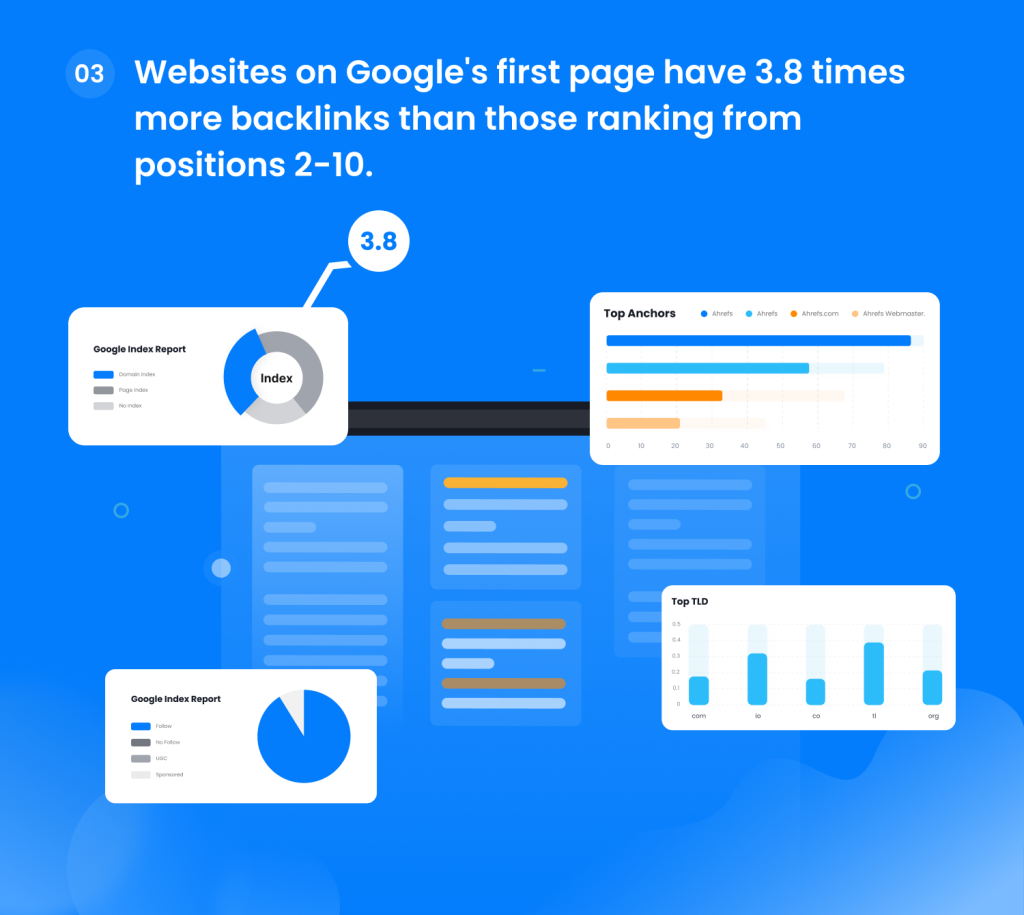
The top-ranking result for search queries on Google typically has 3.8 times more backlinks than the pages ranked in positions 2 through 10 (first page).
My career in SEO (search engine optimisation), spanning more than a decade, has demonstrated to me and my clients how these ‘digital votes of confidence’ can significantly enhance a website’s search visibility on Google—let’s not forget Bing and Yahoo either. A backlink is a link from another website to yours (website A linking to website B).
Take note that the hyperlink is a one-way outbound link, i.e., website B does not have to link back to website A for the link to be classified as a backlink for website A.
These inbound links (from your prospective links pointing to your website) affect SEO more than you might think.
Article Highlights
- The foundation of SEO success is backlinks.
- Google’s top rankings are dominated by websites with more backlinks.
- When it comes to backlinks, quality is more important than quantity.
- Link-building was forever changed by Google’s Penguin update.
- More than 96% of webpages lack both backlinks and thus traffic.
- When it comes to domain authority, editorial links are the goal.
- Backlink efforts need to strike a balance between trust and relevancy.
- Backlinks increase visibility, traffic, and conversions.
- Your SEO efforts should be future-proof.
- Successful link-building demands a combination of strategy and creativity.
Search engines use backlinks (also called linking pages) as trust signals to evaluate your content’s authority, quality, and relevance, among others (there are over 200 significant factors).
While the concept may appear straightforward, putting it into practice can be challenging (am I exaggerating?).
What is step one as an SEO enthusiast?
Learn the skill set to ‘formulate’ a backlink strategy.
The backlink strategy may include editorial links, guest posts, resource mentions, and digital PR features, which I will explain further later on.
A real-world example of authoritative backlinks is getting your comment, explanation, or view added to an article in return for a link back to the source (your piece of content).
Let me walk you through everything you should consider and understand about ‘earning’ backlinks (and Google’s rules and policies) in 2025.
My view, my insight:
- Quality over quantity is a non-negotiable factor
Backlinks from authoritative and niche-relevant websites carry more weight and less risk of future complications when Google pushes out algorithm updates (we just love those).
History of Backlinks—Then and Now
Link building has changed dramatically since the early days of SEO, when quantity mattered more than quality.

Trust me when I say it was like the “Wild West” on the internet.
Google’s algorithm has undergone significant changes, particularly in its ability to identify backlink quality (such as authority and relevance).
Back “then”, even links from sketchy sources could push poorly designed sites to Google’s top spots in the SERPs.
Here is a brief list of common link-building tactics that were used in the past:
- Blog comment links: Often using keyword-rich anchor text in the name field or within the comment itself, marketers would leave comments on blog entries.
- Forum links: Users would be able to add links to their websites in their forum signatures and forum comments.
- Directory links: Listing in web directories became a popular strategy for link-building.
- Article directories: Authors often sent their articles to article directories, which included links back to their own websites.
- Websites would exchange reciprocal links, usually displayed on “link pages” or in sidebars.
- Sitewide links: Typically located in the footer or sidebar, these links appear on every page of a website.
- Blogroll links: Blogs sometimes featured a blogroll, a list of suggested sites in their sidebar.
- Redirects: Some SEOs would purchase expired domains, including current inbound links, and direct them to their target website.
The above tactics were extremely popular back “then”, but what can we expect halfway through 2025?
Who knows what Google has planned?
Many websites received penalties (shocker?) for using questionable link-building tactics that used to be standard practice only a few years ago.
Google’s Penguin update of 2012 changed everything about link quality evaluation.

I was closely monitoring this update, and it completely transformed the industry.
Everyone had to change their best practices overnight, which was a significant adjustment (man oh man).
Why Are Backlinks Important?
Backlinks are crucial ranking factors (admit them or not) in the world of search engine optimisation, serving as signals of confidence for your website or a specific internal page of content.
These incoming links from other web pages (referring pages) to your site play a significant role in determining your website’s authority, credibility, and relevance in the eyes (metaphorically, of course) of search engines.
When reputable websites link to your content, it signals to Google and alternate search engines that your information is valuable and trustworthy—the result: higher search engine rankings (we all have our eyes on that first page position).
Backlinks also facilitate the discovery of new web pages, including domains, by search engine crawlers (referred to as ‘spiders’ back in the day), helping to index (discover) website content more efficiently.
Popular SEO tools like Ahrefs.com, Semrush.com, and Moz.com each have their own criteria for rating domains, which focus on referring domains or backlinks.
- Ahrefs: Domain Rating (DR) – my go-to
- Semrush: Authority Score (AS) – my second favorite
- Moz: Domain Authority (DA) – arguably the most used term
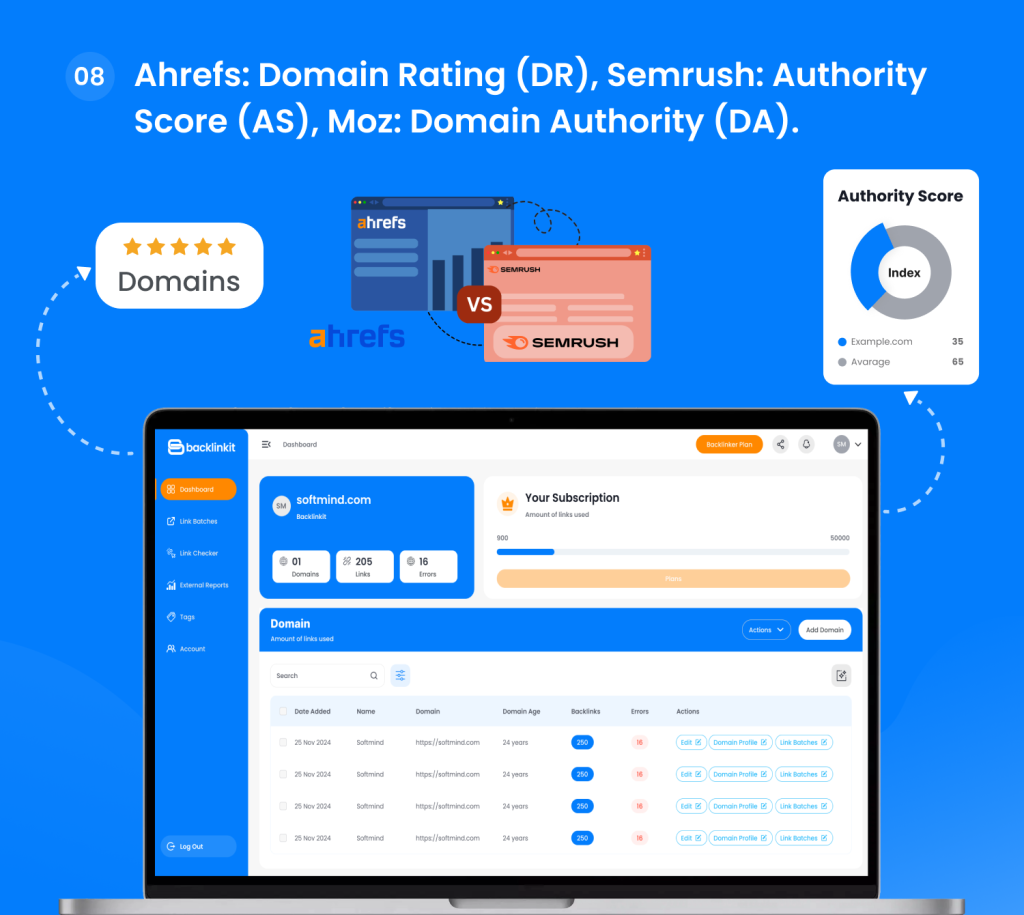
Did you know that these scores range from 1 to 100, but Google doesn’t use them as ranking factors? My recommendation is that you shouldn’t rely only on these metrics to identify quality (authoritative) websites.
Since search engine optimisers, not Google, use these metrics as ranking factors, I view DR, AS, and DA, among others, as synthetic benchmarks.
Google had a visible ranking metric called PageRank (this was actually an indication of how Google valued your website).
What does this tell us about Google’s original search engine algorithm?
The algorithm was fundamentally flawed regarding the volume of backlinks pointing to a website. As you can conclude, backlinks have been part of the algorithm since the ‘get go’.
In my opinion, backlinks will continue to be the key ranking signal for the foreseeable future.
Here’s something surprising (or is it?): 96.55% of all pages on the internet get zero organic traffic because they have zero backlinks.
How often does Google update their search engine algorithm? The answer is between 500 and 600 times per year, according to smartbrief.com.
In general, website owners only pay attention to larger algorithm updates (what a relief, right?).
Our friends over at searchengineland.com shared this: Now we know: Here are Google’s top 3 search ranking factors
“Google’s Andrey Lipattsev reveals links, content, and RankBrain are the top three ranking signals in Google’s search algorithm.”
Thank you, Andrey Lipattsev! Google will never give a clear, definite answer, but we will take the “top 3 comments” (let’s assume backlinks are number 1 for the sake of this article).
More often than not, the outcome of a thoroughly optimised website is relevant organic traffic from SERPs (search engine results pages), i.e., Google.com, to the specific page (URL) that was optimised.
Relevant traffic translates into more sales, subscriptions, or monetisation opportunities, ultimately resulting in an increase in online revenue for your e-commerce, SaaS, or blog.
Every website or business owner dreams of this outcome – a well-spent return on investment.
Unexpectedly (or unforeseen), less than 20% of online businesses succeed, according to an article posted by failory.com in 2023.
Could this be due to a lack of SEO knowledge, marketing expertise, or financial resources? Let me know what you think contributes to this statistic.
Let me keep you out of the 80% statistic by explaining what a backlink is and how it can drive traffic (potential clients) to your website (if you read until the end, that is).
Backlinks and Website Performance
I’ll keep this short… I’ll try my best.
Technical performance and link acquisition share an intriguing connection. Websites with “Good” Core Web Vitals scores attract more root domains than sites with “Poor” scores.
Nobody wants to link to a page that takes 10 seconds to load or spits out a 500 error.
This shows that technically established websites naturally pull in more quality backlinks.
Technical excellence alone won’t guarantee high-quality backlinks.
You need a complete strategy that combines technical optimisation with valuable content output (user-first approach).
Keep this in mind – just saying…
Types of Backlinks in SEO

This is the part most people are interested in.
I bet you’ve received email after email and message after message on LinkedIn from so-called “outreach specialists.”
The two most common opening lines you can surely relate to are:
- Hi sir/madam,
- Hi, dear
It is important to note that, besides backlink types, there are other values that may be even more significant, such as rel link attributes (URL tag) and robot meta tags, which relate to indexability.
If you don’t know the meaning and importance of these values, you’ll be disappointed.
I’ll discuss this in detail in a later article, but let’s bullet point key points on the rel link attribute (rel=) values:
- Follow (dofollow)
- Nofollow
- UGC (user-generated content, also seen as a nofollow)
- Sponsored (also seen as a nofollow)
<a>
href=”https://domain.com/blog/nofollow-anchor-text/” rel=”nofollow”>hello world
</a>
For a diversified backlink profile, follow is not always the go-to value.
NOTE: Confirm with the author if the page in question will be added to the sitemap (domain.com/sitemap.xml) or excluded.
Backlinks Come in Various Forms
There are numerous forms of backlinks, and utilising each effectively can help in achieving a ‘natural’ and ‘diversified’ backlink profile (that Google loves).
Don’t worry; there are many tools that can help you monitor these metrics.
Text Links—Most Common
Text links (hyperlinks) are the most popular form of backlink.
These links are clickable text (anchor text) that navigates to another webpage (page on an external domain).
Text links are seen as highly effective for SEO, as the anchor text provides search engines with contextualised context about the outbound linked URL.
Side note: links can be set to open in the same window or a new tab using the target=”_blank” attribute. I highly recommend you always add the rel=”noreferrer noopener” element when opening a link in a new tab.
Why do I recommend this approach? The rel attribute sets the associated relationship between the linking page and the linked URL.
Setting it to noopener noreferrer is to prevent a type of phishing known as tabnabbing. I’ll let Wikipedia explain in more detail.
We will cover the types of text links in a future article. Yes, this goes deep.
- Branded Anchors
- Naked URL
- Generic Anchors
- Exact Match Anchors
- Partial March Anchors
- Industry Anchors
…and the list goes on.
Image Links—With Alt Text
Image links are exactly that: hyperlinks attached to an image (jpg, png, webp, etc.). When a visitor clicks the image (<img>tag in HTML), they are redirected to the destination URL just like a text link would.
Image alt text (alt= tag in HTML) is a must! Why? – It provides search engines with additional information about the linked content.
Despite their underutilisation, I believe they have great SEO value.
Redirects—301 and 302
Redirects were extremely popular up until the mid-2000s, not to say some don’t incorporate this into their SEO strategy (different approach) today.
Redirects (<meta http-equiv=”refresh” content”0; url=$URL”>), among other methods, can be added in the header of a page similar to other meta tags.
This redirects URL A to URL B like magic.
Here are the two most common redirects:
- 301 Redirect—a permanent redirect that informs search engines and visitors that the page has moved to a new location.
- 302 Redirect—a temporary redirect that informs search engines and visitors that the page may return back to the original destination.
On to the primary backlink types (time to get some link juice).
Guest Post—Blogging
Guest posting, also known as guest blogging, is a core SEO strategy where an individual writes (produces) a piece of content for another website or blog.
The website owner will usually have a set of rules or guidelines that the writer needs to follow to keep a standard in regard to content quality.
The following bullet points are common guidelines:
- Word count
- Topic/Niche
- Content structure
- On-site SEO
- Outbound links
- Rel attribute (follow, nofollow, UGC, Sponsored)
The content (article) first and foremost should provide value for the reader and showcase experience and authority on the topic.
A poorly written article will not only discourage user engagement but also risk the possibility of not being indexed on SERPs.
To counter this, website owners typically make ‘tier 2’ links pointing to the newly published guest post to encourage Google to index the page.
When the content is extremely poor, this is only a temporary fix, if it even works at all. This outcome is a bad ranking signal for the domain that the article was published on.
Google is all for user-first relevant content; failing to tick that box will render this guest post a waste of time.
How does this process benefit the guest author and the host blog?
- The guest author gets potential exposure (not the main focus) and a ‘valuable’ backlink.
- The host blog received a ‘value-added’ piece of content, which helps build out the website’s authority in the respective niche.
You’ll notice I put ‘valuable’ and ‘value-added’ in single quotes.
Here is why—some authors end up going for any website willing to accept the guest post. These situations leave the author with a less than desired backlink, which carries little to no authority.
On the flip side—the blog owner ends up publishing poor content on their website, which negatively impacts SEO. This is mostly true when the blog owner accepts guest posts purely for the purpose of financial gain.
I am going to be real with you; the key motivation behind guest posting is backlinks.
Guest post opportunities are easy to come by by simply utilising Google search.
Input: “Write for us” SEO and hit that search button.
There are many variations of this query you can explore to upscale your outreach attempts.
A common route is to outsource your outreach strategy by utilising services on sites like Fiverr or Upwork. In most cases, this is very affordable and a time-saving tactic.
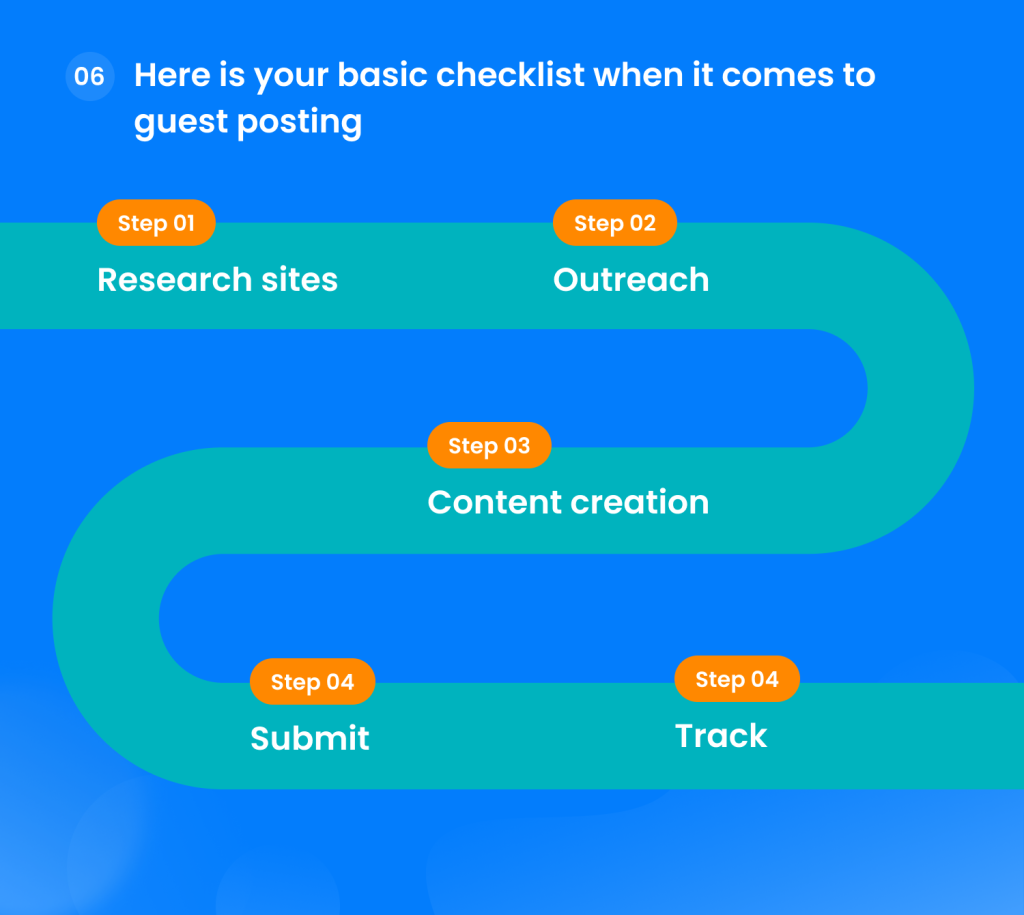
Here is your basic checklist when it comes to guest posting:
- Target authoritative and niche-relevant sites
- Write quality and value-added content (don’t spin, 100% AI-generated or plagiarise).
- Diversify anchor text selection strategically
When done right, a guest post strategy can be extremely beneficial from an SEO perspective.
Don’t take the lazy approach, as you might be taking one step forward and two steps back!
Editorial Links—Source of Information
Editorial links are at the top of the list when it comes to impressing Google, signalling authority and trust.
Yes, they are EARNED.
When a website’s author finds your content or website valuable, it becomes a worthwhile candidate for referencing, i.e., linking back to the source – your domain.
“The bitterness of poor quality remains long after the sweetness of low price is forgotten.”
This aligns well with the fact that editorial links are much harder to ‘earn’ than low-effort or paid links, adding long-term value to websites authority and reputation—proving that investment in quality content truly pays off.
On the subject of quality content, let’s talk AI real quick.
AI is a wonderful technology that can be extremely beneficial in assisting with a lot of tasks, such as content creation.
Unfortunately, some content writers (even SEO agencies) opt for a shortcut, producing hundreds of articles that are purely AI-formatted, without ‘sprinkling’ any personal input (human touch) into their online content creation.
I can hear you say, Eh, but there are tools to humanise the content and pass an AI detection check. That is true.
But…
That may fool an algorithm but might not convince another website’s author to use you as a reference.
Your on-page user engagement metrics will paint a picture and signal to Google’s algorithm that the content is poorly written.
If you are after editorial links, the above is not the way to go!

Write to impress!
Below, I have listed five examples of editorial links to best illustrate scenarios where your content can be featured.
Citations in Articles:
- A journalist writes a piece about SEO trends and includes a link to your research or case study because it supports their argument or opinion.
Expert Mentions:
- A blog about marketing mentions your website or tool as one of the best solutions for content optimisation, including a link to your homepage or product page (Yip yip).
Infographic Shares:
- You create an engaging infographic about a complicated subject, and another website embeds (displays) it in their content while linking back to your site as the original source of the media.
Awards or Rankings:
- Your website is featured in a “Top SEO Tools for Small Businesses” article, and the writer links to your website from that article showcasing your award.
Interviews or Quotes:
- You are interviewed as an industry expert (guru or professional), and the publication links to your website via their bio or content.
Before we move on to niche edits, it is important for me to mention that the term “earn media coverage” can really help you stand out.
- Press releases
- HARO (Help a Reporter out)
PR is ‘popping off’.
Before we go off topic again, let’s discuss this in detail in a future article.
Niche Edit—Relevant Content
Unlike guest posts, which we discussed earlier, niche edits are backlinks added into existing content (promise me you will check if the page is indexed) to blend and read naturally within the article it is placed in.
For this to make sense, I am sure you figured that the page’s or post’s topic and content need to be relevant to yours.
Niche edits are also referred to as curated or contextual links.
It sounds good, right? Niche-relevant links without having to write a few thousand-word articles.
Not as easy as you might think when it comes to acquiring quality and worthwhile opportunities, trust me.
Here is how the process could work:
Content Identification:
- Your friendly neighbourhood SEO or link builder (or you) identifies (relevant, high-quality) articles or web pages that align with the target website’s niche or industry.
Outreach:
- They (or you) contact the website owner or editor to request (sometimes followed by begging) a link placement. This might involve offering compensation (95% of the time), mutual value (4.9%), or simply highlighting how the link improves the content (0.1%).
Link Placement:
- The outbound link is inserted within the content with appropriate anchor text, ensuring that it is surrounded by relevant context, thus making sense to the reader.
Note, even if the article is relevant, always insist on providing a short paragraph to accommodate the anchor text. This way you control the surrounding content to some extent.
I must admit that niche edits are one of my favourite ways of obtaining backlinks, yet they are only possible when you have quality content.
Why are niche edits popular and preferred over other implementations?
Existing Authority:
- Links are placed on URLs that have already been indexed by search engines (check this on Google first site:seo.com/page-name/), often on established and authoritative domains.
Immediate Impact:
- Since the content is already live, niche edits can potentially start influencing search rankings and traffic sooner than other types of backlinks.
Contextual Relevance:
- These links are surrounded by related content, making them more relevant and impactful for SEO than unrelated (BIG no-no) backlinks.
Did you know that when it comes to link placement, it is best to:
- Position anchor within the content
- Add anchor in surrounding context relevance
- Keep number of other links on the page (EFL) low
EFL, also known as external follow links, refers to outbound links that enable Google to follow them back to the source, thereby passing link juice.
Without a doubt, valuable backlinks appear naturally within relevant, high-quality content, but don’t take my word for it—put it into practice.
Note that a few high-quality, topically relevant (and authoritative) backlinks carry more weight than many low-quality ones from poor sources.
Or the fancy version:
“A single gourmet meal is worth more than a thousand fast-food burgers”—and the same goes for backlinks.
Alternative—Link-Building Opportunities
These are much easier to obtain and implement yourself.
Social Banklinks (tweet tweet)
Social backlinks are typically nofollow yet play a role in an SEO strategy, despite not having a direct impact.
These are links referring back to your website shared on social media platforms by users on Facebook, Twitter, LinkedIn, Instagram, Pinterest, etc.
They can come from:
- Posts or updates
- Profiles or bios
- Comments or discussions
- Shares, retweets, or repins
Although the SEO value is not the usual “link juice”, social media links indirectly benefit SEO efforts (tick every box) in the following ways:
- Driving Referral Traffic: Social media links can bring in a significant amount of traffic to your site, signalling to search engines that your content is popular and valuable among your audience.
- Increasing Brand Visibility: A strong social media presence increases your brand’s exposure, which can lead to natural backlinks from other websites in your niche.
- Boosting Engagement Metrics: An increase in engagement metrics (time on site, lower bounce rates) from social referral traffic can positively affect rankings.
I am confident that I left out some ‘benefits’ (feel free to let me know), but these are the three I’ve found most valuable in my experience.
Discussion Forum (insane amount of traffic)
Discussion forums like Reddit can play a valuable role in your backlink strategy when executed correctly. Similar to social links, forum links are nofollow by default (telling Google to ignore the link).
The time has come to share some traffic stats.
- Reddit: Monthly visits as of March 2024—2.2 billion visits
- Quora: Monthly visits in August 2024—837.1 million visits
Mind-blowing, right?
Forums are platforms where users discuss topics, share knowledge, and seek recommendations.
Links (website URLs) inserted within discussion threads, comments, or posts on forums like Reddit, Quora, and niche-specific forums.
Here is a simple example:
Reddit post: “What are the best SEO tools?”
Comment: “You might find this tool helpful: [https://tool.com].”
Give this search operator a try: site:reddit.com inurl:(seo | backlinks)

What is a search operator, and what does it do in this context?
Let me explain.
Special commands and symbols (:””()|) designed to help you refine search results are called Google advanced search operators.
Introducing these operators into your search queries will help you to filter out irrelevant content and locate exactly what you need without the fluff.
Marketers in SEO, digital marketing, and anyone searching for particular outcomes on the internet will especially benefit from these site operators.
In combination with a tool such as Ahrefs, identifying SERP results with high traffic (in your niche) is displayed below each search result.
Tah-dah. Reddit threads are ready and waiting for you to engage with!
Here are some indirect SEO benefits:
- Traffic: Popular topics (threads) can drive targeted traffic from engaged users.
- Increased Visibility: When shared in relevant discussions, your content can reach a niche audience that is already looking for your product or service.
- Backlink Opportunities: Popular threads might attract bloggers or journalists who can potentially reference (good links to have) your link in their own content.
When using this approach, remember that adding value is the key to standing out.
Blog Comments (WHAT???)
Blog comments ‘could/might/has/have’ served as a tool for building backlinks (it was extremely popular back in the day), but their effectiveness has diminished over time due to overuse by spammers automating the posting process.
In my professional opinion, I would not recommend spending time on building these links by utilising blog comments.
Let’s look at an example anyway (it is all about education, right?).
Blog posts’ comments contain links, either in the comment’s body or in the “Website URL” field the blog’s comment form (typically a WordPress blog) provides.
Example (note that people had different templates and variations to help get their comments approved):
- Blog post: “Top 10 SEO Link-Building Trends”
Comment: “Great article! I’ve found that [guest post trend] works really well too. I discussed this in detail here: [Your URL]. Let me know if you found it valuable.”
The main reason behind blog post comment links was to get backlinks pointing to your website, which at the time was a common tactic within the SEO industry.
Let me add—it was also extremely cheap (on the black market…)!
Brand Mentions (brand clout)
Brand mentions, unlike backlinks, which directly link to your website, are simply textual references (https://brand.com in text format is still a brand mention).
Brand mentions are powerful ‘signals’ that, while not always directly linked to your website, play a crucial role in building authority (domain and brand), boosting your online reputation, and influencing organic traffic.
Google has evolved to consider both linked (href) and unlinked (text) mentions of brands when evaluating the authority and credibility of a site (hell yeah).
These mentions signal to search engines that your brand is important, trusted, and talked about, which can have a positive impact on search rankings over time (I experienced this when doing a lot of PR).
Measuring Backlink Success
Measuring your backlink strategy’s success (or failure) requires more than just counting links.
You need to understand how they affect your SEO performance and ultimately your traffic.
After managing hundreds of link-building campaigns, I’ve developed a systematic approach that goes beyond simple 1, 2, 3 metrics.
I recommend taking the following three points into account:
- ROI calculation requires multiple metrics
- Long-term value exceeds immediate gains (important)
- Competitive analysis is significant
Key Performance Indicators
Successful backlink measurement demands tracking multiple KPIs (key performance indicators).
Industry data shows that new backlinks take an average of 90 days to fully affect your rankings, according to a statement published by Pankaj Yadav over at webapex.com.
In my professional opinion, this is a very broad statement that overlooks so many variables that can push that 90-day timeframe out the window.
Therefore, take it with a pinch of salt.
Essential KPIs to keep an eye on:
Number of referring domains
- The total number of unique domains (websites) that link to your website.
Domain Authority trends
- We briefly touched on this earlier in the article, but in this use case we look at our own domain’s domain rating (DR, DA, or AS) to see an uptick in value, indicating positive backlink efforts.
Organic traffic changes
- Monitoring the difference in traffic to your website via search engines from SERPs.
Conversion rates from referral traffic
- Visitors taking action (e.g., a signup, purchase, or lead) after clicking through from a backlink.
Social media engagement metrics
- Engagement metrics such as shares, likes, comments, and clicks on posts containing your backlink on social media platforms.
ROI Calculation Methods
The ROI calculation can combine both short-term and long-term metrics, but it depends on how you define and measure both revenue and cost.
Let me explain:
Short-Term Metrics in SEO ROI
- Revenue from immediate conversions: This includes sales or leads generated shortly after launching SEO campaigns, such as during a promotional period or for time-sensitive content.
- Initial costs (startup) of SEO implementation: Expenses such as technical, on-site, initial content creation, and setup fees are part of short-term costs.
Long-Term Metrics in SEO ROI
- Cumulative organic traffic growth: SEO benefits often compound as time goes on, with older content continuing to drive traffic and generate leads or sales.
- Sustained authority and rankings: High-quality backlinks or evergreen content built today might drive revenue for years to come.
- Ongoing management costs: Expenses like content updates, outreach, and monitoring tools extend into the long term.
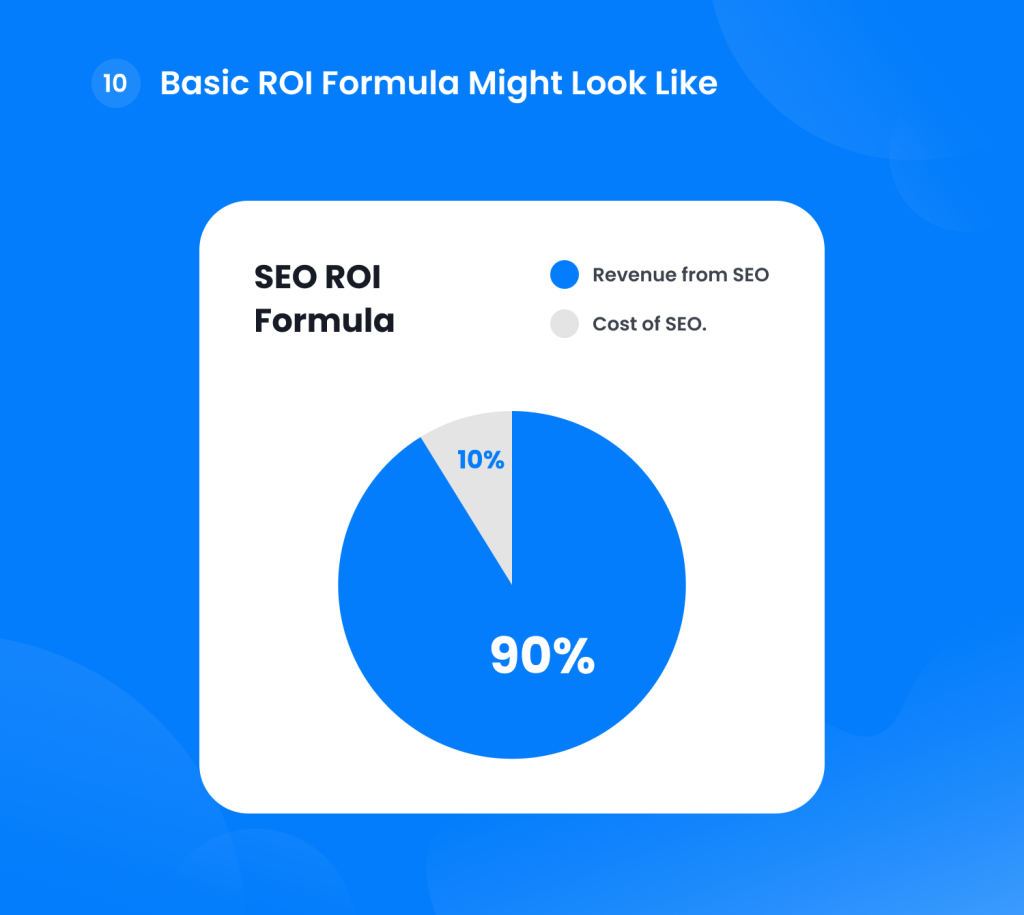
Here is what a basic formula might look like:
ROI = (Revenue from SEO – Cost of SEO) / Cost of SEO x 100
Example:
- Revenue from SEO: $10,000
- Cost of SEO: $2,000
ROI = (($10,000 – $2,000) / $2,000) × 100
ROI = (8,000 / 2,000) × 100
ROI = 4 × 100 = 400%
In this case, for every $1 spent on SEO, you earned $4 in return (you are doing something right!). A positive ROI like this indicates that your SEO efforts are profitable.
Ready to upscale?
Remember that the true value often extends beyond immediate returns.
Competitive Benchmarking
Comparing your backlink profile against your competitors provides valuable insights (sneak peek).
Three key areas stand out in competitive analysis—for me at least:
- Keyword strategy: Understand your close competitor’s keyword targeting and identify opportunities where you can outperform.
- Link diversity: Evaluating the big 3: quantity, quality, and relevance of their incoming links, uncovering link-building opportunities.
- Content performance: Assess which content types attract the most organic links and resonate with your competitor’s audience to help guide your current content strategy.
Websites with similar backlink profiles do not always tend to rank closely together in search results for similar keywords.
If your competitors have an average of 1,000 referring domains, does that become the benchmark needed to compete effectively?
Hell no. They might have taken the ‘dirty’ way, looking for quick results, usually manipulating the algorithm in the short term.
Remember the quality-over-quantity discussion we had earlier?
Tools like Ahrefs or Semrush make tracking these metrics systematic and save hours of manual analysis (we are all about saving time).
Take into consideration that maintaining a successful backlink profile requires regular attention and input.
Major monthly reviews help adjust strategies based on real-world data.
How does your current monitoring approach stack up against these standards?
Are You Ready to Adapt?
What does the future of backlinking look like?
The techniques we depend on now might soon be outdated as the digital ‘matrix’ changes.
Originally a basic numbers game, backlinking has evolved into a complex form of decision-making needing accuracy, relevance, and foresight.
The question to you is whether your present methods are sustainable or whether you are unintentionally (due to a lack of knowledge) laying a foundation that might crumble with the next Google algorithm update.
I mentioned this before, and I am mentioning it again: Google’s algorithms change hundreds of times each year.
Beyond strategy, what about the tools and technologies shaping the future of backlinking? AI-powered algorithms, user behaviour analytics, and even Web3 innovations could redefine how search engines value connections between sites.

So ask yourself, are you prioritizing quality over quantity? Are you earning links that matter, or merely accumulating numbers that inflate vanity metrics?
The real takeaway here is the following: Backlinks are not just “digital votes of confidence”—they are investments in your online visibility.
Like any investment, they demand careful planning, consistency, and a willingness to adapt to new standards—and quick!
So, how will you future-proof your backlinking approach in 2025 and beyond?
My one colleague from back in the day always used to say, “Backlinks are like links in a chain – strong ones hold everything together, weak ones snap under pressure, and broken ones… well, they’re just hanging around waiting for you to fix them.
The next move is yours to make.